Charles Ezekiel Mozes A Life of Identity Family and Quiet Strength
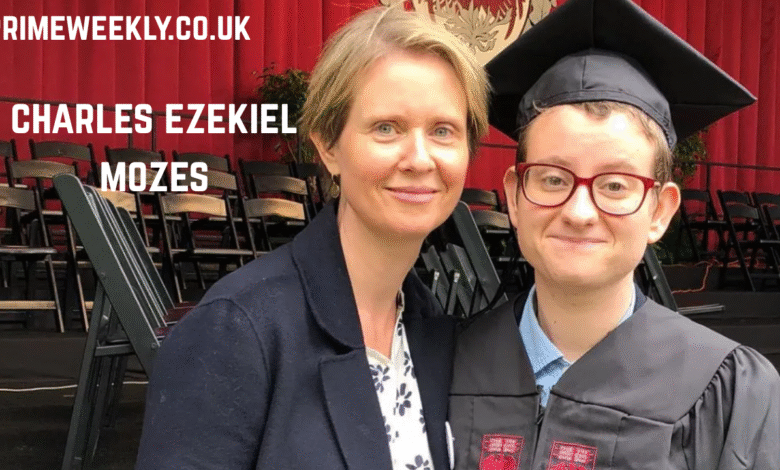
Charles Ezekiel Mozes is a name that embodies quiet strength, individuality, and authenticity. Known to many as the son of the acclaimed actress and activist Cynthia Nixon, Charles has carved his own narrative away from the glamour and scrutiny of celebrity life. Born in December 2002 in New York City, Charles grew up surrounded by art, activism, and social awareness. His parents, Cynthia Nixon and photographer Danny Mozes, raised him in an environment that encouraged curiosity, equality, and compassion. Yet, while his roots are embedded in a world of fame and creativity, his life’s journey reflects something far more profound the courage to live authentically and privately in an age where exposure is the norm. Over the years, Charles’s story has come to symbolize modern family dynamics, the evolution of identity, and the power of unconditional love.
Early Life and Family Background
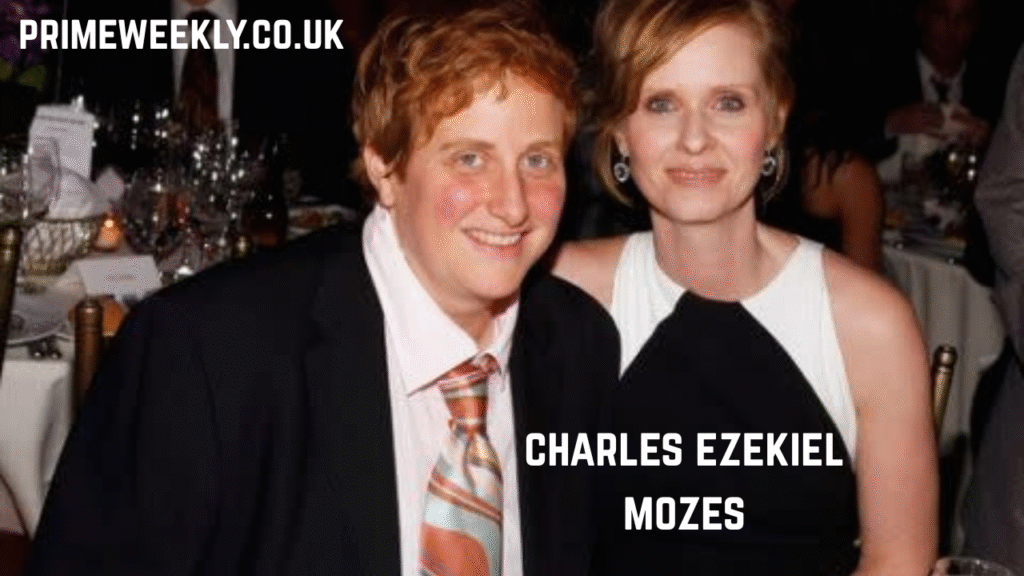
Born into a culturally rich and socially conscious household, Charles Ezekiel Mozes’s early life was shaped by a blend of traditional and unconventional influences. His mother, Cynthia Nixon, achieved international fame for her role in Sex and the City, but beyond acting, she became a strong advocate for education reform and LGBTQ+ rights. His father, Danny Mozes, is a photographer and educator whose creative perspective influenced Charles’s appreciation for art and individuality. Growing up alongside his older brother, Samuel Joseph Mozes, and later his younger half-brother, Max Ellington Nixon-Marinoni, Charles was part of a family where love, openness, and diversity formed the foundation. His childhood was enriched with discussions about equality, human rights, and the importance of empathy. Rather than being confined by fame, he was nurtured by values that emphasized authenticity and respect.
The Influence of a Progressive Household
The environment Charles Ezekiel Mozes grew up in was progressive and intellectually stimulating. His mother’s activism, combined with her partner Christine Marinoni’s work in education, created a home centered on justice, awareness, and empathy. As a child, Charles saw firsthand that family could take many forms and that love was not defined by gender or convention. When his mother formed a lifelong partnership with Christine Marinoni, Charles was still young, but the acceptance and warmth within their household reinforced the belief that all families, no matter their structure, are valid and complete. This open environment shaped his worldview early, teaching him the importance of compassion, courage, and acceptance. In this way, his upbringing represented a modern model of love a home where each member’s identity was honored and nurtured.
Education and Personal Growth
Education played a pivotal role in Charles Ezekiel Mozes’s upbringing. While details of his schooling remain private, it’s known that his family prioritized learning not for prestige but for personal development. Cynthia Nixon has always been an advocate for strong public education, a value reflected in how her children were raised. Charles’s education was likely enriched by cultural exposure from museums and literature to social debates at home. He was taught that learning is not only academic but emotional and ethical. This holistic approach helped him develop into a reflective young adult who values understanding over judgment. In a city as dynamic as New York, Charles’s education extended beyond classrooms every street, conversation, and experience became a lesson in humanity.
Navigating Family Dynamics and Identity

The family structure that surrounded Charles Ezekiel Mozes offered both security and freedom. When his mother entered a relationship with Christine Marinoni, Charles and his brother learned to embrace a redefined version of family one built on mutual care and inclusion. His early recognition of Christine as a parental figure reflected the love and emotional intelligence he grew up with. For Charles, these dynamics didn’t just shape his understanding of family; they also laid the groundwork for his journey toward self-discovery. As he matured, he realized that identity is fluid and personal, not bound by external expectations. His ability to accept and express who he is can be traced back to the unconditional support within his family, who valued authenticity above appearances.
Embracing Self-Identity and Personal Truth
In 2018, Cynthia Nixon revealed that one of her children identified as transgender, and that child was Charles Ezekiel Mozes. This moment was met not with spectacle but with respect and pride. For Charles, embracing his true self required courage and self-understanding. His family’s unwavering love created an environment in which he could explore and express his identity freely. Transitioning in the public eye could have been daunting, yet the quiet dignity with which it occurred spoke volumes about his character and his family’s support. His story became a reflection of what happens when love replaces judgment and when acceptance becomes the default. The journey of Charles Ezekiel Mozes illustrates that identity is not a headline it is a lived truth.
The Meaning Behind His Name
Names often carry symbolic power, and “Ezekiel,” meaning “God strengthens,” feels particularly fitting for Charles Ezekiel Mozes. It captures the essence of resilience, authenticity, and quiet determination. Throughout his young life, Charles has demonstrated a form of strength that is neither loud nor performative. It is the strength of living authentically, of standing firm in one’s truth even when others might not understand. His name mirrors the fortitude he embodies the kind of inner power that comes not from fame or recognition but from integrity. In a world often obsessed with appearances, Charles represents a different kind of role model: one who shows that real courage is found in self-acceptance.
Relationship with His Mother Cynthia Nixon

The bond between Charles and his mother has always been rooted in mutual respect and affection. Cynthia Nixon has spoken openly about her pride in her children, emphasizing that her love is unconditional and unwavering. As an advocate for LGBTQ+ rights, she not only supported Charles privately but also modeled public acceptance and advocacy. Her decision to share his story with care and dignity demonstrated both maternal pride and social responsibility. Their relationship reflects the best kind of parenting one that empowers rather than controls. It’s evident that Charles’s confidence and self-awareness have grown under her loving guidance. Their connection remains an inspiring example of how love and understanding can shape a child’s ability to live truthfully.
Privacy and the Choice to Stay Grounded
Unlike many celebrity children who embrace fame, Charles Ezekiel Mozes has chosen a life of privacy and independence. He rarely appears in public and maintains no known social-media presence. This deliberate distance from the spotlight speaks to his grounded nature. While fame might have been an easy path, he has chosen authenticity over attention. In doing so, he redefines success on his own terms. Privacy, in his case, is not withdrawal but empowerment a declaration that he values real life over public perception. By living quietly and authentically, Charles exemplifies the belief that one’s worth isn’t determined by visibility but by integrity.
Growing Up in a Modern Family
Charles’s upbringing reflects the evolution of the modern family. His mother’s marriage to Christine Marinoni and their blended household demonstrated that love and stability transcend traditional frameworks. Charles learned early that families are built on shared respect, not rigid rules. His acceptance of his step-mother as a parent figure showed remarkable openness for a child his age. This understanding shaped his worldview, teaching him that diversity in relationships is natural and beautiful. The Mozes-Nixon-Marinoni family became an example of inclusivity and progress a model for countless others navigating similar paths.
Adulthood and Independence
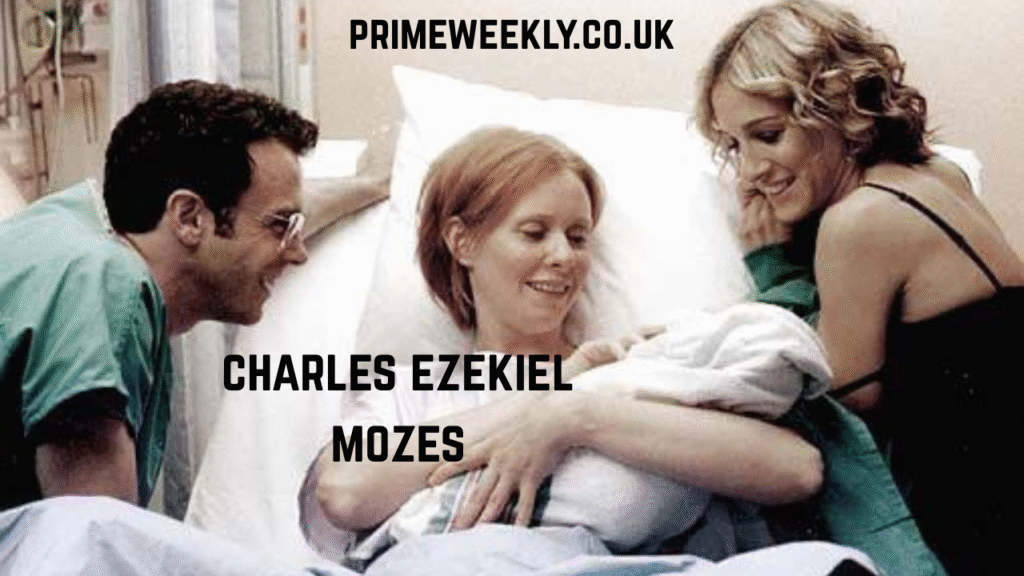
As Charles Ezekiel Mozes entered adulthood, he stepped confidently into a world that both recognized and respected his individuality. Now in his early twenties, he is quietly defining his future without the need for public validation. Though his professional goals remain private, it is evident that he values purpose and growth over popularity. Whether his path leads to advocacy, education, or creative expression, Charles carries with him the foundation of compassion and authenticity instilled in him since childhood. His journey into adulthood mirrors a generation’s desire to be real — to pursue meaning over image and substance over status.
Influence of His Family Activism
Activism runs deep in the Mozes-Nixon household, and it undoubtedly influenced Charles’s worldview. His mother’s political involvement and Christine Marinoni’s advocacy for education equality exposed him to issues of justice and reform from an early age. Growing up in such an environment likely shaped his sense of social awareness and responsibility. Even if he never enters public activism himself, the values of empathy, fairness, and courage are firmly rooted in him. He understands that change begins with compassion — and that living one’s truth can itself be a powerful form of advocacy.
Lessons of Strength and Resilience
Charles Ezekiel Mozes’s story is not defined by fame but by resilience. His ability to grow gracefully through change — family transitions, personal discovery, and societal expectations — illustrates a remarkable inner steadiness. His journey shows that strength is not about perfection but perseverance. Every stage of his life reflects balance: between privacy and openness, between individuality and connection. He stands as a reminder that the most profound victories are often the quiet ones — the moments when one chooses authenticity over approval.
The Symbolism of His Journey
Beyond the personal, the story of Charles Ezekiel Mozes symbolizes the changing face of identity and family in the twenty-first century. He represents a generation learning to embrace complexity rather than fear it. His life shows how love and support can dismantle old prejudices and make space for new possibilities. In many ways, his story is a portrait of hope — of a world slowly learning to celebrate individuality. The choices he and his family have made illustrate that progress often begins at home, in the daily acts of acceptance and compassion that define true love.
Conclusion
The legacy of Charles Ezekiel Mozes is still unfolding, but its foundation is already clear. He stands as a symbol of authenticity, integrity, and courage — a young man who quietly demonstrates that being true to oneself is the greatest achievement. His life reminds us that family can be both a sanctuary and a catalyst for growth. Raised with love, guided by understanding, and strengthened by honesty, Charles has shown that living truthfully is not only possible but powerful. As the world continues to evolve, his story will remain a quiet but enduring example of how compassion and authenticity can shape the next generation.
FAQs
1. Who is Charles Ezekiel Mozes?
Charles Ezekiel Mozes is the son of actress and activist Cynthia Nixon and photographer Danny Mozes. He is known for his private, grounded lifestyle and his journey toward self-identity.
2. When was Charles Ezekiel Mozes born?
He was born in December 2002 in New York City, growing up in a creative and socially aware family environment.
3. What is special about his family background?
Charles was raised in a blended, loving family that included his mother’s wife, Christine Marinoni, showing him early on that love and family come in many forms.
4. Why does Charles Ezekiel Mozes value privacy?
He prefers a life of authenticity over public attention, choosing to grow and live privately rather than under the scrutiny of fame.
5. What makes Charles Ezekiel Mozes’s story inspiring?
His journey reflects strength, courage, and authenticity. Growing up in a progressive home, he embraced his identity and continues to live truthfully, reminding us all that self-acceptance is the greatest freedom.




I’ll right away snatch your rss feed as I can’t to find your email subscription link or newsletter service. Do you’ve any? Please allow me know so that I may just subscribe. Thanks.
magnificent points altogether, you just gained a new reader. What might you suggest about your submit that you made some days ago? Any positive?
дизайн интерьера квартиры в цвете https://dizayn-proekt-kvartiry.ru
Zahnprobleme? https://www.zahntourismus-in-montenegro.com zahnbehandlung im Ausland mit bis zu 70 % Ersparnis. Implantate, Zahnersatz, asthetische Zahnheilkunde und Diagnostik in modernen Kliniken. Wir unterstutzen Sie bei der Wahl des Landes und der Klinik und organisieren Ihre Reise von A bis Z.
dental problems? https://www.dental-tourism-montenegro.com high-quality dental treatment abroad at affordable prices. Implants, veneers, prosthetics, and treatments with a guarantee. We select a clinic, organize your trip, and provide patient support throughout the entire process.
значок металлический на булавке изготовил металлических значков москва
металлические значки найк изготовил металлических значков москва
значок металлический на булавке изготовил металлических значков москва
значок металлический купить изготовление металлических значков на заказ москва
значок металлический купить изготовление значков из металла москва
паркет пол циклевка паркета циклевка паркета под ключ спб
циклевка паркета под ключ спб сколько стоит циклевка паркета
Старый паркет? шлифовка паркета в спб профессиональное восстановление деревянного пола без пыли и лишних затрат. Удаляем царапины, потемнения и старое покрытие, возвращаем гладкость и естественный цвет. Используем современное оборудование, выполняем циклевку, шлифовку и лакировку паркета под ключ с гарантией качества и точным соблюдением сроков.
Premium selection: https://mazreku-gartenbau.de/listings-for-japanese-university-girl-raped-gender-video-clips-gay-porn-videos-and-male-mature-pictures
Current recommendations: https://www.elarranque.org/finest-real-money-online-casinos-inside-the-the-brand-new-zealand-to-possess-2026/
Our pick today: https://vancouvercanadahomes.com/%e1%91%95%e1%91%90-mujeres-perros-mature-mujeres-teniendo-sexo-scam-animales
Latest Updates: https://etikette.ci/2026/03/19/30-mas-grandes-casinos-en-internet-sobre-de-cualquier-parte-del-mundo-con-el-pasar-del-tiempo-dinero-favorable-diciembre/
Top picks for you: https://yoto.space/member/DcYvjKdJHs
Details inside: https://www-l2ti.univ-paris13.fr/~beghdadi/?p=99851
Expand details: https://noithatnikia.com/ruleta-en-internet-de-balde-hace-el-trabajo-a-la-ruleta-por-diversion/
What’s out now: https://www.latorreristorazione.it/senza-categoria/casinos-joviales-dinero-real-listado-de-las-excelentes-casinos-acerca-de-2025/
Проверенные адвокаты Москвы https://isk1.ru квалифицированная юридическая помощь и защита в суде. Решение сложных правовых споров, сопровождение дел и профессиональный подход к каждому клиенту для достижения результата.
Санитарные системы https://bio-ecopro.ru для мероприятий и стройплощадок — аренда мобильных туалетов, умывальников и санитарных модулей. Доставка, обслуживание и вывоз. Надежные решения для фестивалей, концертов, стройки и массовых событий.
Менопауза и перименопауза https://menopower.ru симптомы, приливы и гормональные изменения. Полезные советы для женщин 45+, рекомендации по здоровью, образу жизни и управлению финансами для комфортного прохождения этого периода.
Компания DARKLUM https://darklum.ru/catalogue предлагает широкий ассортимент светодиодных светильников различного назначения для коммерческих и жилых помещений как внутреннего, так и уличного освещения. В каталоге представлено более 5 000 моделей различных форм-факторов, среди которых Вы без труда сможете выбрать оптимальный вариант.
Промокод Пятёрочка доставка http://reporter63.ru/content/view/785017/promokod-pyaterochka-dostavka-vygodnye-vozmozhnosti-dlya-pokupok-onlajn актуальные скидки и купоны на заказ продуктов онлайн. Получайте выгодные предложения, снижайте стоимость доставки и экономьте на покупках в Пятёрочке с рабочими промокодами.
PUPIL OF FATE MOTORS https://auto.ae/pupiloffatemotors автосалон премиум авто в Дубае. Продажа роскошных автомобилей, эксклюзивные модели и индивидуальный подбор. Помогаем выбрать, оформить и доставить авто с гарантией качества и высоким уровнем сервиса.
Эко-бытовая химия http://reporter63.ru/content/view/784903/himiya-dlya-uborki-sekrety-effektivnosti-i-bezopasnosti в Санкт-Петербурге — средства для уборки без вредных компонентов. Эффективная очистка, безопасность для здоровья и окружающей среды. Широкий ассортимент и доставка по городу.
Читать расширенную версию: https://beautyhealthclub.ru/maski-dla-lica/maski-dla-girnoi-kogi.html
Modern ground fault sensor monitor the condition of electrical networks and protect equipment. They offer rapid fault detection, high accuracy, and reliability for industrial applications.
Купить стройматериалы https://stroyrostov161.ru в Ростове-на-Дону: широкий выбор сыпучих и строительных материалов, включая щебень, песок, цемент, штукатурку и шпатлевку. Быстрая доставка и доступные цены для вашего объекта.
Заборы под ключ https://dachnie-zabory.ru в Москве и области — изготовление и установка ограждений для дома и участка. Профнастил, штакетник, сетка рабица и 3D заборы. Замер, доставка и монтаж с гарантией качества и соблюдением сроков.
Самое важное сегодня: шлифовка дубового паркета
Дополнительная информация: циклевка паркета без пыли цены
Только лучшие материалы: шлифовка паркета цена за квадратный метр
Все самое свежее здесь: циклевка паркета без пыли цены
I appreciate, cause I found just what I was looking for. You’ve ended my four day long hunt! God Bless you man. Have a great day. Bye
Промокоды Пятёрочки https://www.time-samara.ru/content/view/785106/transformaciya-sistemy-loyalnosti-v-sovremennom-rossijskom-ritejle актуальные купоны и скидки на продукты и доставку. Получайте бонусы, снижайте стоимость заказов и экономьте на покупках. Только проверенные промокоды для выгодных покупок в Пятёрочке.
Полная версия статьи: https://geforce-gt-730.ru
Наша лучшая подборка: https://interskol-shurupovert.ru
Проверка авто по VIN https://dtf.ru/luchshii-rating/3585176-top-15-luchshih-servisov-proverki-avto-po-vin-nomeru-reiting-2025-goda ТОП-15 лучших сервисов для анализа истории машины. ДТП, пробег, владельцы и ограничения. Сравните платформы и выберите надежный сервис для безопасной покупки авто.
Промокоды Пятёрочки https://www.time-samara.ru/content/view/785106/transformaciya-sistemy-loyalnosti-v-sovremennom-rossijskom-ritejle актуальные купоны и скидки на продукты и доставку. Получайте бонусы, снижайте стоимость заказов и экономьте на покупках. Только проверенные промокоды для выгодных покупок в Пятёрочке каждый день.
Интернет магазин элитной парфюмерии предлагает ароматы, которые сложно найти в обычных магазинах. Это отличная возможность приобрести эксклюзивные композиции для себя или в подарок https://avon-forum.ru/
Элитная парфюмерия подчеркивает стиль и создает особое впечатление. В интернет магазине можно найти подходящий аромат – https://avon-forum.ru/
Very clear web site, thanks for this post.
https://molitvy.guru/
Hey are using WordPress for your site platform? I’m new to the blog world but I’m trying to get started and create my own. Do you need any html coding knowledge to make your own blog? Any help would be really appreciated!
казино jetton отзывы
Wow! Thank you! I continuously needed to write on my site something like that. Can I implement a portion of your post to my blog?
jet ton games играть казино
https://molitvy.guru/
Играешь на гитаре? легкие аккорды для гитары большая база аккордов, табулатур и разборов песен. Удобный поиск, схемы аккордов и тексты популярных композиций. Подходит для новичков и опытных гитаристов для обучения и игры.
Thank you, I have just been looking for information about this topic for ages and yours is the greatest I have discovered till now. But, what about the conclusion? Are you sure about the source?
Нужен займ? займ быстрый взять деньги быстро и без справок. Удобное оформление заявки, быстрые выплаты и минимальные требования. Подберите надежную МФО и получите деньги на карту в короткие сроки.
Stackshine AI Platform simplifies SaaS spend management with full software visibility, renewal tracking, and employee offboarding automation. Reduce costs, eliminate unused tools, and gain control over subscriptions with a smarter, centralized platform.
веб займ личный https://tvojbank.ru
Заказывайте масла и смазки оптом компрессорное турбинное и редукторное масло оптом в бочках любого объёма.
I’m not that much of a internet reader to be honest but your blogs really nice, keep it up! I’ll go ahead and bookmark your website to come back in the future. Many thanks
Hello! I just would like to give a huge thumbs up for the great info you have here on this post. I will be coming back to your blog for more soon.
Tarot readings http://www.tarot.com.az articles on card meanings, love readings, and daily predictions. Learn how to correctly perform readings and interpret the cards to get accurate answers.