Why lake texoma should be capitalized in All Forms of Writing

The phrase “lake texoma should be capitalized” has become a frequent point of confusion for many writers, students, and content creators, especially when distinguishing between generic lake references and proper geographical naming. When discussing the well-known body of water located between Texas and Oklahoma, the correct form is Lake Texoma, with both words capitalized because the name identifies a specific and official place. English grammar treats proper nouns as unique titles that must always appear with capital letters, regardless of where they fall in a sentence. Therefore, when someone wonders whether “lake texoma should be capitalized,” the straightforward answer is yes, because the lake’s name is a formal identifier. Capitalization plays an important role in maintaining clarity and correctness in writing, especially in travel guides, academic work, and professional communication.
Grammar Rules Showing Why lake texoma should be capitalized in Every Context

To understand why “lake texoma should be capitalized,” one must explore the fundamental rules of English grammar. Proper nouns refer to specific people, places, organizations, and landmarks, all of which require uppercase letters. Geographic features—lakes, rivers, mountains, islands, national parks—follow strict capitalization guidelines. For example, we capitalize Lake Michigan, Lake Ontario, and Lake Tahoe. Lake Texoma belongs in this same grammatical category, and writing it in lowercase disrupts standard English patterns. Even if the structure of the sentence changes or additional descriptors are added, the capitalization must remain the same. Writers who understand that “lake texoma should be capitalized” follow the universal rule that specific natural landmarks always appear with initial capital letters.
The Geographic Importance Behind the Idea That lake texoma should be capitalized
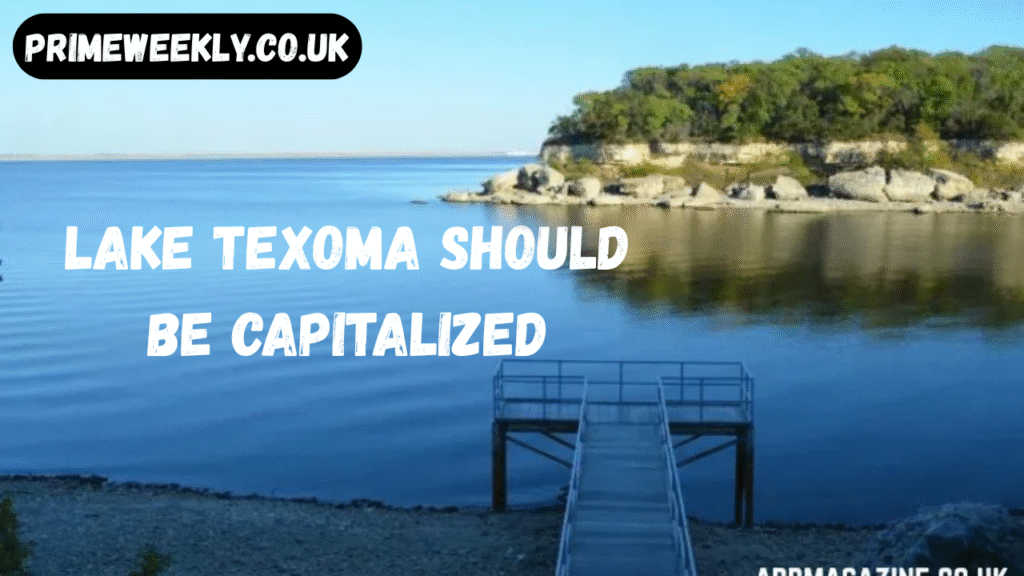
The reasoning behind the statement “lake texoma should be capitalized” is not limited to grammar; it is also connected to the lake’s cultural and geographic identity. Lake Texoma is one of the largest reservoirs in the United States and holds major significance for tourism, recreation, fishing, and the local economies of Texas and Oklahoma. Because the lake serves as an important regional landmark, its name carries social and historical weight. Capitalization honors its identity as an officially recognized location rather than a vague, generic term. When writers neglect capitalization, they unintentionally diminish the prominence of the place. Recognizing that “lake texoma should be capitalized” reinforces the importance of treating this well-known landmark with accuracy and respect in written communication.
Why Writers Students and Professionals Agree That lake texoma should be capitalized
Professionals across all fields—journalists, educators, editors, researchers, and business communicators—universally agree that “lake texoma should be capitalized” because proper nouns uphold clarity and professionalism. Style guides such as MLA, APA, Chicago, and AP all specify that geographic names must include capital letters. When someone writes “lake texoma” incorrectly, it stands out as a basic writing mistake that weakens the reliability of the text. Students are often graded on capitalization accuracy, and workplace documents must maintain strict correctness to convey competence. Because readers rely on writers to present information clearly, remembering that “lake texoma should be capitalized” ensures that communication maintains a standard of quality and precision.
Common Mistakes Leading People to Ask Whether lake texoma should be capitalized

Errors typically occur when writers confuse generic nouns with specific names. Writing “the lake is deep” correctly uses a lowercase “lake” because it does not identify a particular location. However, writing “lake texoma” incorrectly combines a generic structure with a specific landmark, causing a grammatical mismatch. Another error occurs when someone believes that only the unique part of the name (“Texoma”) requires capitalization, leading them to write “lake Texoma.” But English rules state that the generic unit becomes part of the proper name when it directly precedes and identifies the landmark. This is why “lake texoma should be capitalized” as “Lake Texoma,” just as we write Lake Erie or Lake Powell. Understanding these common mistakes clarifies why the phrase must remain capitalized in every context.
How the Rule That lake texoma should be capitalized Fits Broader Language Patterns
Proper nouns follow predictable patterns across the English language. The rule that “lake texoma should be capitalized” aligns with how we treat named entities such as Yellowstone National Park, the Rocky Mountains, the Mississippi River, or the Grand Canyon. These names always begin with capital letters because they designate unique locations. When someone follows capitalization rules consistently, they strengthen the structure of their writing and help readers easily distinguish between general ideas and specific references. The capitalization of Lake Texoma fits this long-established linguistic system, which ensures order, clarity, and consistency in English communication. Recognizing how “lake texoma should be capitalized” fits these patterns helps writers apply the same rule correctly to many other geographic names.
Why Style Consistency Depends on Knowing That lake texoma should be capitalized
Consistency is one of the most important principles of effective writing. When writers alternate between lowercase and uppercase forms of a proper noun, the text appears inconsistent and distracts the reader. The rule that “lake texoma should be capitalized” prevents these inconsistencies by providing a stable standard for every mention of the landmark. Whether the name appears once or fifty times, the capitalization must remain identical to maintain professional quality. Consistent usage also supports the credibility of educational materials, tourism guides, formal documents, and digital content. Remembering that “lake texoma should be capitalized” ensures that the writing remains polished and cohesive from beginning to end.
Cultural and Educational Reasons Supporting That lake texoma should be capitalized
Schools, textbooks, maps, government documents, and tourism boards all emphasize the correct capitalization of official place names. This consistent educational reinforcement is one reason “lake texoma should be capitalized” is a widely accepted rule across communities and generations. Capitalization preserves cultural identity and helps maintain uniformity in how people refer to major landmarks. Because Lake Texoma holds strong regional significance for both Texas and Oklahoma, its name is part of the cultural and economic identity of the area. Using lowercase diminishes that identity, while writing Lake Texoma correctly respects its official status. Knowing that “lake texoma should be capitalized” ensures that written communication aligns with community standards and educational practices.
Practical Writing Examples Showing That lake texoma should be capitalized
Examples help writers clearly understand why “lake texoma should be capitalized.” Sentences such as “We spent the weekend at Lake Texoma” or “Lake Texoma attracts thousands of visitors every year” demonstrate proper capitalization. These examples show how the name functions grammatically and why lowercase forms appear incorrect or informal. Whether used in descriptive paragraphs, research papers, travel articles, or casual writing, the proper noun must always retain its capital letters. Writers who apply this rule consistently show mastery of fundamental grammar, which enhances the readability and professionalism of their work. Seeing how “lake texoma should be capitalized” in different contexts makes it easier for writers to apply the rule correctly.
Conclusion
In conclusion, the statement “lake texoma should be capitalized” is supported by grammar rules, linguistic patterns, geographic significance, and professional writing standards. Because Lake Texoma is a specific and officially recognized location, its name must always appear with capital letters. Following this rule ensures clarity, consistency, and respect for the landmark’s identity. Understanding why “lake texoma should be capitalized” helps writers avoid common errors and strengthens the quality of their writing across all contexts.
FAQs
Why is “lake texoma should be capitalized” always correct?
Because Lake Texoma is a proper noun that refers to one specific geographical landmark and must follow capitalization rules.
Does the capitalization change in the middle of a sentence?
No, Lake Texoma must always be capitalized in every sentence position.
What if the word “lake” is being used generically?
Generic uses are lowercase, but the specific name Lake Texoma must always be capitalized.
Do style guides support this rule?
Yes, major writing style guides consistently require capitalization of proper geographical names.
Is capitalization important for clarity?
Yes, correct capitalization ensures accuracy, professionalism, and readability in writing.
Read More: The Deep Meaning Cultural Essence and Modern Significance of darah trang